
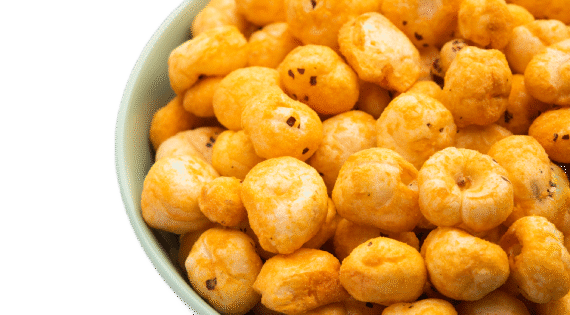
Picture this: You’re settling in for a movie night or need a quick afternoon snack. You reach for the popcorn out of habit – but wait! Should you be reaching for makhana instead?
Both makhana and popcorn are popular, crunchy snacks that seem healthy at first glance. But when you dig deeper into the nutritional science, there’s a clear winner. In this comprehensive comparison, we’re pitting these two snacking favorites against each other to determine which truly deserves a spot in your pantry.
Spoiler alert: The results might surprise you!
Round 1: Nutritional Value – The Core Comparison
Let’s start with a head-to-head nutritional breakdown (per 100g serving):
Makhana Nutritional Profile:
- Calories: 347 kcal
- Protein: 9.7g
- Fat: 0.1g
- Carbohydrates: 76.9g
- Fiber: 14.5g
- Calcium: 60mg
- Iron: 1.4mg
- Phosphorus: 350mg
- Magnesium: 210mg
Air-Popped Popcorn Nutritional Profile:
- Calories: 387 kcal
- Protein: 12.9g
- Fat: 4.5g
- Carbohydrates: 77.8g
- Fiber: 14.5g
- Calcium: 7mg
- Iron: 3.2mg
- Phosphorus: 358mg
- Magnesium: 144mg
Initial Analysis: At first glance, they seem comparable. Both are relatively low-calorie, high-fiber options. However, the differences become significant when we look deeper.
Winner: Makhana – Lower fat, lower calories, and significantly higher calcium content.
Round 2: Protein Quality and Completeness
Makhana’s Protein Advantage
While makhana contains slightly less protein by weight, it provides a more complete amino acid profile. It’s particularly rich in:
- Arginine (supports cardiovascular health)
- Leucine (muscle protein synthesis)
- Essential amino acids your body can’t produce
Popcorn’s Protein Limitations
Popcorn has higher total protein but lacks several essential amino acids, making it an incomplete protein source. Most of its protein comes from zeins, which are harder for the body to digest and utilize.
Real-World Impact: Makhana provides better protein quality for:
- Post-workout recovery
- Sustained energy
- Muscle maintenance
- Overall nutritional balance
Winner: Makhana – Better amino acid profile and more bioavailable protein.
Round 3: Digestibility and Gut Health
Makhana’s Digestive Benefits
- Easily digestible, even for sensitive stomachs
- Contains resistant starch that feeds beneficial gut bacteria
- Astringent properties help soothe digestive issues
- Doesn’t cause bloating in most people
- Traditionally recommended during digestive upset
Popcorn’s Digestive Challenges
- The hull (outer shell) can be difficult to digest
- Common trigger for IBS and digestive discomfort
- Can get stuck in teeth and gums
- May cause bloating and gas in sensitive individuals
- The hull fragments can irritate the digestive tract
Real-World Experience: Many people report digestive discomfort after eating popcorn, especially if they have sensitive digestive systems. Makhana, on the other hand, is known for being gentle on the stomach.
Winner: Makhana – Significantly more digestible and gut-friendly.
Round 4: Glycemic Index and Blood Sugar Impact
Makhana’s Low Glycemic Advantage
- Low glycemic index (GI around 50)
- Causes slow, steady rise in blood sugar
- Helps maintain energy levels throughout the day
- Doesn’t trigger insulin spikes
- Recommended for diabetics
Popcorn’s Medium Glycemic Impact
- Medium glycemic index (GI around 55-65 depending on preparation)
- Faster blood sugar rise
- Can cause energy crashes
- Higher insulin response
Diabetes Impact: For people managing diabetes or blood sugar issues, the lower GI of makhana makes it a superior choice for maintaining stable glucose levels.
Winner: Makhana – Better for blood sugar management.
Round 5: Weight Loss Effectiveness
Makhana Advantages:
- Higher satiety factor – keeps you full longer
- Lower calorie density
- Minimal fat content
- High fiber and protein combination
- Doesn’t trigger overeating
Popcorn Considerations:
- Easy to overeat (very large volume)
- Commercial varieties often loaded with butter, salt, and oil
- Can trigger binge eating due to volume
- Marketed portions often exceed healthy serving sizes
Real Weight Loss Results: Studies on satiety show that protein and fiber combinations (like in makhana) are more effective for appetite control than fiber alone. The lower calorie density of makhana also means you get more volume per calorie.
Winner: Makhana – More effective for sustainable weight loss.
Round 6: Preparation and Added Calories
Makhana’s Natural Health
- Naturally delicious when roasted
- Doesn’t require oil or butter
- Modern brands offer pre-flavored options using minimal seasoning
- Maintains nutritional integrity during processing
- Ready-to-eat with no preparation needed
Popcorn’s Hidden Calorie Traps
- Plain air-popped is healthy, BUT…
- Movie theater popcorn: Up to 1,200 calories per serving!
- Microwave popcorn often contains trans fats, artificial flavors
- Most people add butter, oil, or salt
- The “healthy” reputation gets destroyed by toppings
The Reality Check: While air-popped popcorn is theoretically healthy, most people don’t eat it that way. The additions of butter, oil, and excessive salt can transform it into a calorie bomb. Pre-flavored makhana from reputable brands maintains its health benefits while delivering taste.
Winner: Makhana – Healthier as actually consumed, not just in theory.
Round 7: Mineral Content and Bone Health
Makhana’s Mineral Superiority
- Calcium: 60mg – Nearly 9x more than popcorn!
- Phosphorus: 350mg – Essential for bone density
- Magnesium: 210mg – Supports calcium absorption
- Optimal calcium-to-phosphorus ratio for bone health
Popcorn’s Mineral Profile
- Calcium: 7mg (minimal)
- Higher iron content
- Less balanced mineral profile
Long-Term Impact: Regular makhana consumption can contribute significantly to bone health, especially for women at risk of osteoporosis. Popcorn doesn’t offer the same skeletal benefits.
Winner: Makhana – Superior for bone health and mineral balance.
Round 8: Allergen-Friendliness and Dietary Restrictions
Makhana’s Universal Safety
✅ Naturally gluten-free
✅ Nut-free
✅ Dairy-free (naturally)
✅ Vegan
✅ Suitable for religious fasting
✅ No common allergens
✅ Safe for celiac disease
Popcorn’s Allergy Concerns
✅ Naturally gluten-free
✅ Vegan (when plain)
⚠️ Often cross-contaminated with gluten
⚠️ Microwave varieties may contain dairy
⚠️ Some people react to corn
⚠️ Corn is a common allergen
Accessibility: Makhana is safe for virtually everyone, while popcorn carries more allergy risks and potential contamination issues.
Winner: Makhana – More universally safe and allergen-friendly.
Round 9: Sustainability and Environmental Impact
Makhana’s Eco-Friendly Production
- Grows in natural wetland ecosystems
- Requires no pesticides or chemical fertilizers
- Supports traditional farming communities
- Harvested by hand with minimal environmental disruption
- Helps maintain wetland biodiversity
- Low carbon footprint
Popcorn’s Industrial Farming Impact
- Typically grown as monoculture crop
- Often requires pesticides and fertilizers
- More industrialized farming practices
- Higher environmental impact from processing and packaging
- Corn farming depletes soil nutrients
Ethical Consumption: Choosing makhana supports sustainable agriculture and traditional livelihoods while being gentler on the environment.
Winner: Makhana – More sustainable and eco-friendly.
Round 10: Culinary Versatility and Taste
Makhana’s Versatility
- Takes on flavors beautifully
- Maintains crunch longer
- Works in both sweet and savory dishes
- Can be used in cooking (curries, desserts)
- Stays fresh longer
- Modern flavors make it exciting
Popcorn’s Classic Appeal
- Great buttery taste when prepared right
- Classic movie snack nostalgia
- Gets soggy quickly
- Limited flavor retention
- Mostly consumed as standalone snack
Taste Test Reality: While popcorn has nostalgic appeal, modern flavored makhana offers exciting taste experiences without compromising health. Brands like Pick & Bite have revolutionized makhana with flavors like Peri Peri and Cheese Masti that rival any popcorn variety.
Winner: Makhana – More versatile with modern flavor innovations.
The Final Scorecard
Let’s tally up the rounds:
Makhana Wins:
- ✅ Nutritional Value
- ✅ Protein Quality
- ✅ Digestibility
- ✅ Blood Sugar Impact
- ✅ Weight Loss Effectiveness
- ✅ Preparation & Real-World Use
- ✅ Mineral Content
- ✅ Allergen-Friendliness
- ✅ Sustainability
- ✅ Culinary Versatility
Final Score: Makhana 10 – Popcorn 0
When Popcorn Might Be Preferable
To be fair, there are scenarios where popcorn might be your choice:
- You’re at a movie theater (limited options)
- You have specific dietary needs requiring higher iron
- You genuinely prefer the taste and can stick to air-popped preparation
- You have no access to makhana
The Verdict: Makhana is the Clear Winner
While popcorn isn’t inherently bad (especially air-popped, plain popcorn), makhana is objectively superior in almost every measurable way:
✅ Nutritionally denser
✅ Better for digestion
✅ More effective for weight management
✅ Superior for bone health
✅ Lower environmental impact
✅ Safer for various dietary restrictions
✅ More versatile in use
Most importantly, makhana delivers all these benefits while still being absolutely delicious – especially with modern flavor innovations.
Making the Switch: Tips for Transition
If you’re a popcorn lover looking to make the switch:
- Start with familiar flavors – Try Himalayan Salt makhana if you love buttered popcorn
- Match your cravings – Cheese Masti for cheesy popcorn lovers, Peri Peri for spice fans
- Keep it accessible – Stock makhana where you used to keep popcorn
- Try it during movies – Break the popcorn-movie association
- Give it a week – Your taste buds will adjust and you’ll love the crunch
Conclusion
In the battle of Makhana vs. Popcorn, makhana emerges as the undisputed champion. It’s not just marginally better – it’s significantly superior in nutrition, health benefits, sustainability, and versatility.
The best part? You don’t have to sacrifice taste for health. Modern makhana brands have cracked the code on making this superfood absolutely delicious. So why settle for popcorn when you can have something better for your body, your taste buds, and the planet?
Ready to make the switch? Explore Pick & Bite’s range of delicious makhana flavors and experience the winning snack for yourself!
Frequently Asked Questions (FAQs)
Q1. Is makhana healthier than popcorn?
A: Yes, makhana is healthier than popcorn in most aspects. It’s lower in calories and fat, higher in calcium, more digestible, has a lower glycemic index, and is better for weight loss and bone health.
Q2. Which has more protein – makhana or popcorn?
A: Popcorn has slightly more protein by weight (12.9g vs 9.7g per 100g), but makhana provides better quality protein with a more complete amino acid profile that’s easier to digest and utilize.
Q3. Can I eat makhana instead of popcorn for weight loss?
A: Absolutely! Makhana is more effective for weight loss due to its higher satiety factor, lower calorie density, and protein-fiber combination that keeps you full longer.
Q4. Is makhana better for diabetics than popcorn?
A: Yes, makhana has a lower glycemic index (around 50) compared to popcorn (55-65), making it a better choice for blood sugar control and diabetes management.
Q5. Does makhana taste as good as popcorn?
A: Modern flavored makhana is delicious! Brands like Pick & Bite offer exciting flavors like Cheese Masti, Peri Peri, and Tangy Tomato that rival any popcorn variety while being healthier.
Q6. Why is makhana easier to digest than popcorn?
A: Unlike popcorn, makhana has no hard hull that can irritate the digestive tract. It’s naturally gentle on the stomach and contains resistant starch that supports gut health.
Q7. Is makhana more sustainable than popcorn?
A: Yes, makhana grows in natural wetland ecosystems without pesticides, supports traditional farming, and has a lower carbon footprint compared to industrially farmed corn.
Q8. Can people with corn allergies eat makhana?
A: Yes! Makhana is corn-free and safe for people with corn allergies. It’s also gluten-free, nut-free, and dairy-free, making it suitable for most dietary restrictions.
Q9. Which is better for bone health – makhana or popcorn?
A: Makhana is far superior for bone health, containing nearly 9 times more calcium than popcorn, plus optimal ratios of phosphorus and magnesium for bone strength.
Q10. How many calories does makhana have compared to popcorn?
A: Makhana has 347 calories per 100g compared to popcorn’s 387 calories. A typical 30g serving of makhana contains about 105 calories, making it a lower-calorie option.